
The world beyond the buildings. The character behind the drawings.
Dumpy /ˈdəmpi/ Adj. Short and stout; deficient in length or stature.
Traditional/Standard Adjective
Short and Thick: Describes someone or something that is squat, low-set, or stout in build. (e.g., “He was a dumpy man in a tweed jacket.”)
Shabby and Dingy: Refers to a place that is run-down, neglected, or unattractive. (e.g., “We stayed in a rather dumpy motel on the edge of town.”)
Merriam Webster as retold by Google AI overview…seems legit.
So what is a Dumpy?
In the tradition of architectural drawing, the scale figure, coloquially dubbed as the “scalie” is a commonly understood convention to convey a sense of scale by showing an average human figure’s relationship to the architectural space described on the page. There has been an unquestioned and austere quality to these unchanging silhouettes, and an uncanny throughline of the same exact library of 2D figures making their way from office to office and university to university for the past generations of architects born into or beyond the AutoCad era. But shouldn’t these scale figures live a better life than the mere rote copy and paste across projects, doomed to the same lifestyle independent of the project’s author?
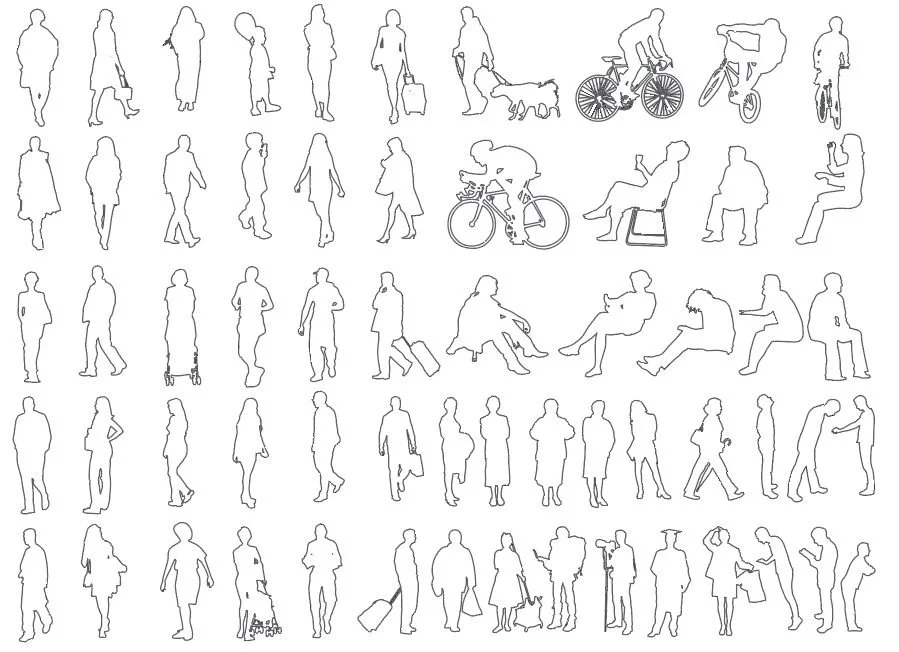
Standard catalogue of CAD figures; passed down from generation to generation
As a young student in architecture school I long pondered the life of the scale figure beyond the drawing and questioned the mismatch of style between my novicely executed building proposals and the clean lines of the conventional CAD scale figure. I couldn’t stop thinking about the power dynamic I played against the figure, one which positioned me as their god and them as an unwitting participant. I thought I could at least offer them a small kindness by adding a little more personality to their physique in using the same creative hand that conjured the buildings they were forced to inhabit. Or perhaps it was an early fit of imposter syndrome that I felt my rough around the edges buildings did not deserve to host such sterile and perfected silhouettes—maybe by bringing them down to my level of representation I could even the field. And so in my first act of “defiance” against the institution of architecture I had only just joined, I began work to produce my very own library of customized scale figures, one that could exude the style and personality reflected in my building design. The result was something of a hybrid between a mal-proportioned Smurf and a bastardized character straight out of the fantasy realm of Adventure Time. A new result that abandoned Vitruvian ideals of scale and proportion in favor of raw expression and emotion. Seeing the figures paired with my student work was totally bizarre, as the dial toward playful humor and dry wit had been turned way too hard to the extent that my building design pairings were now unrecognizable of being wrought from the same plane of existence. But I was hooked by the possibility of this strange world hybrid, and thus the Dumpy was born.
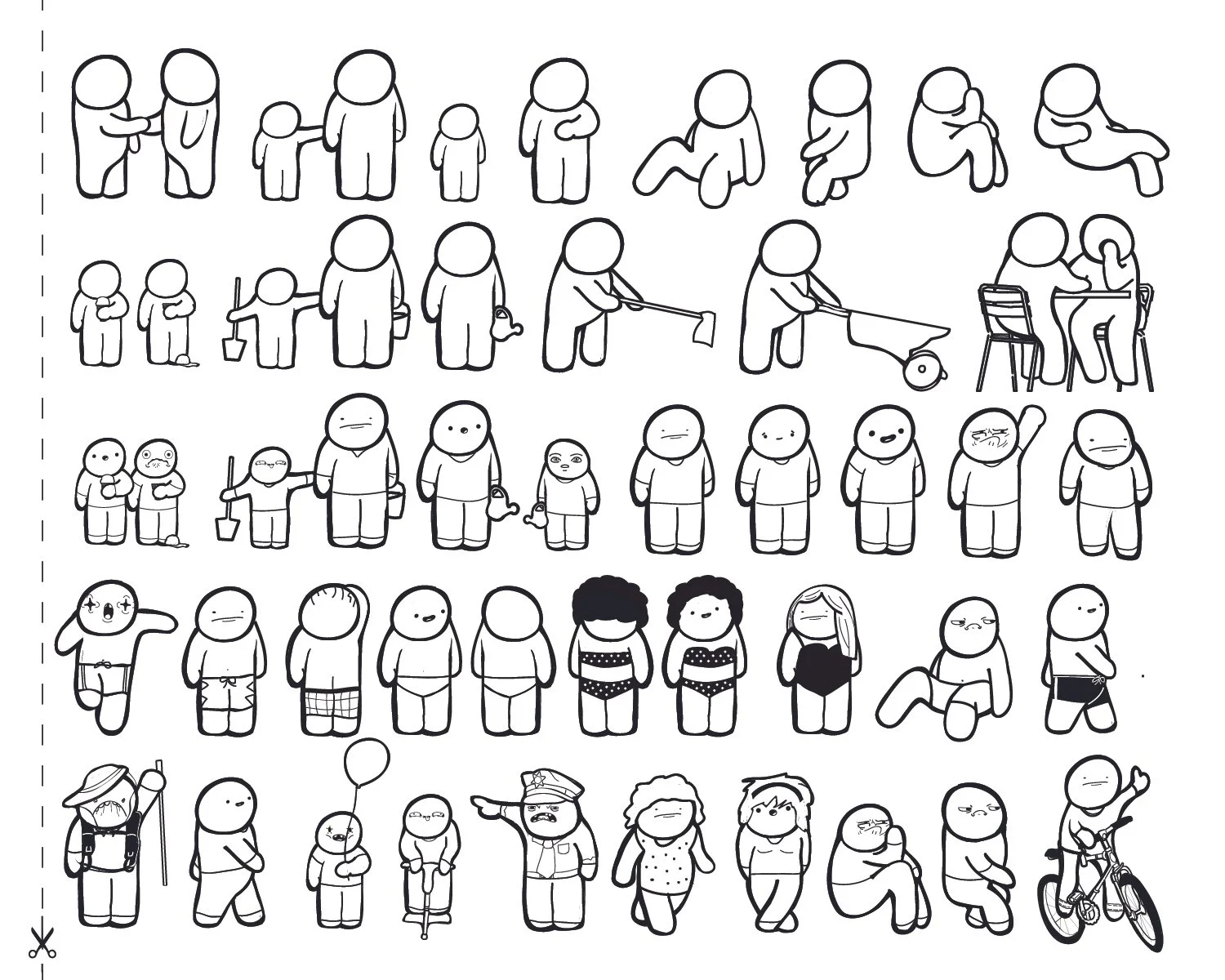
The first “Dumpy Catalogue” of custom scale figures
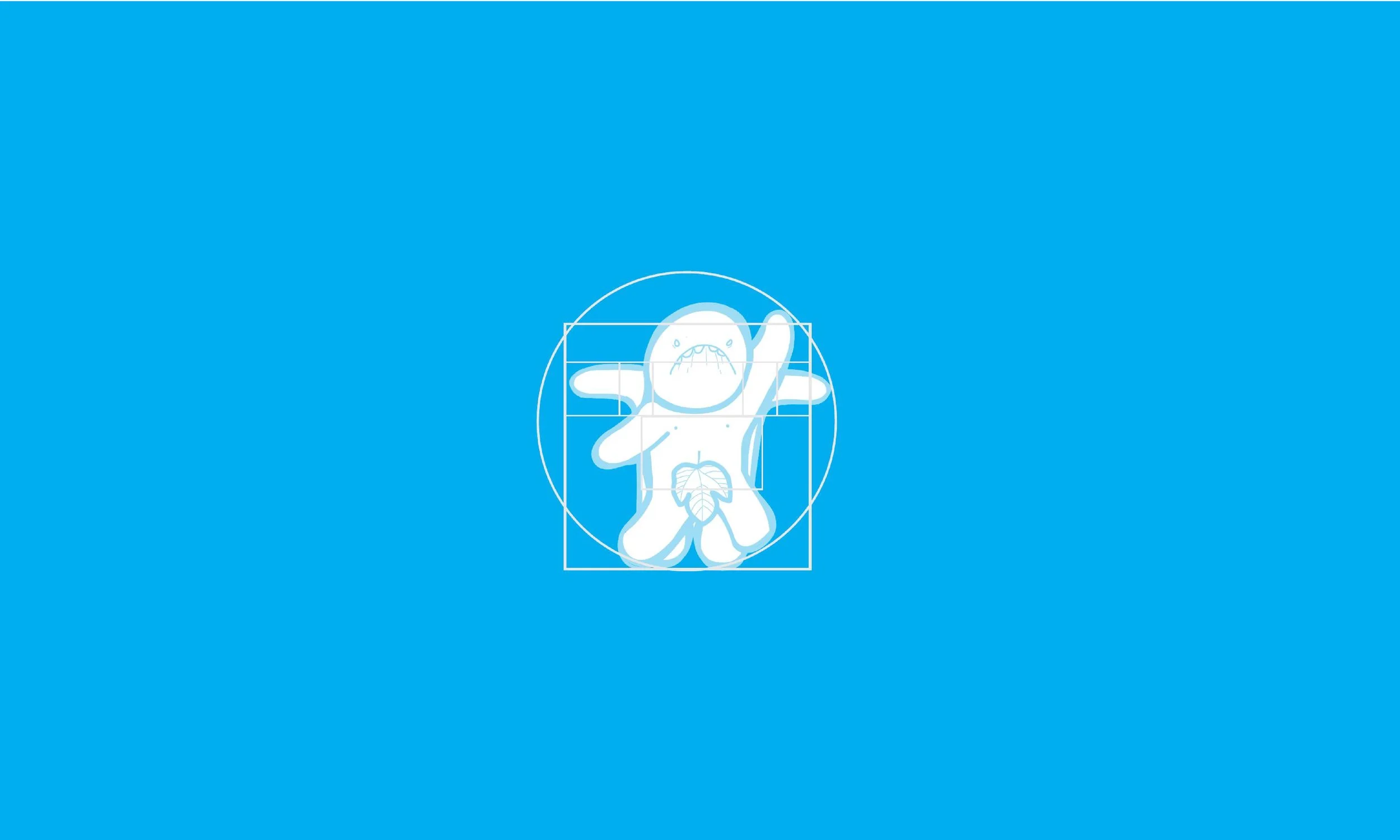
The Dumpy physique abandons Vitruvian ideals of form and proportion in favor of humor and absurdity.
If anything, this early experiment spurred me in the direction of rejecting convention and pursuing my own interests above all other priorities of conventional “good” design. I carried this mantle forward into graduate school and increasingly my world of building design felt more cogent and clicked the dial closer to belonging in the same bizarre world I had concocted years earlier. By examining the hypothetical building through the lens of the hypothetical occupant, the worlds which unfolded started to resemble something more like a comic book than they did a set of architecture drawings. This was a world that increasingly would lend comfort, one in which the “architecture” was more of a foible to allow narrative to take root and bring life to the characters whom inhabited the drawings.
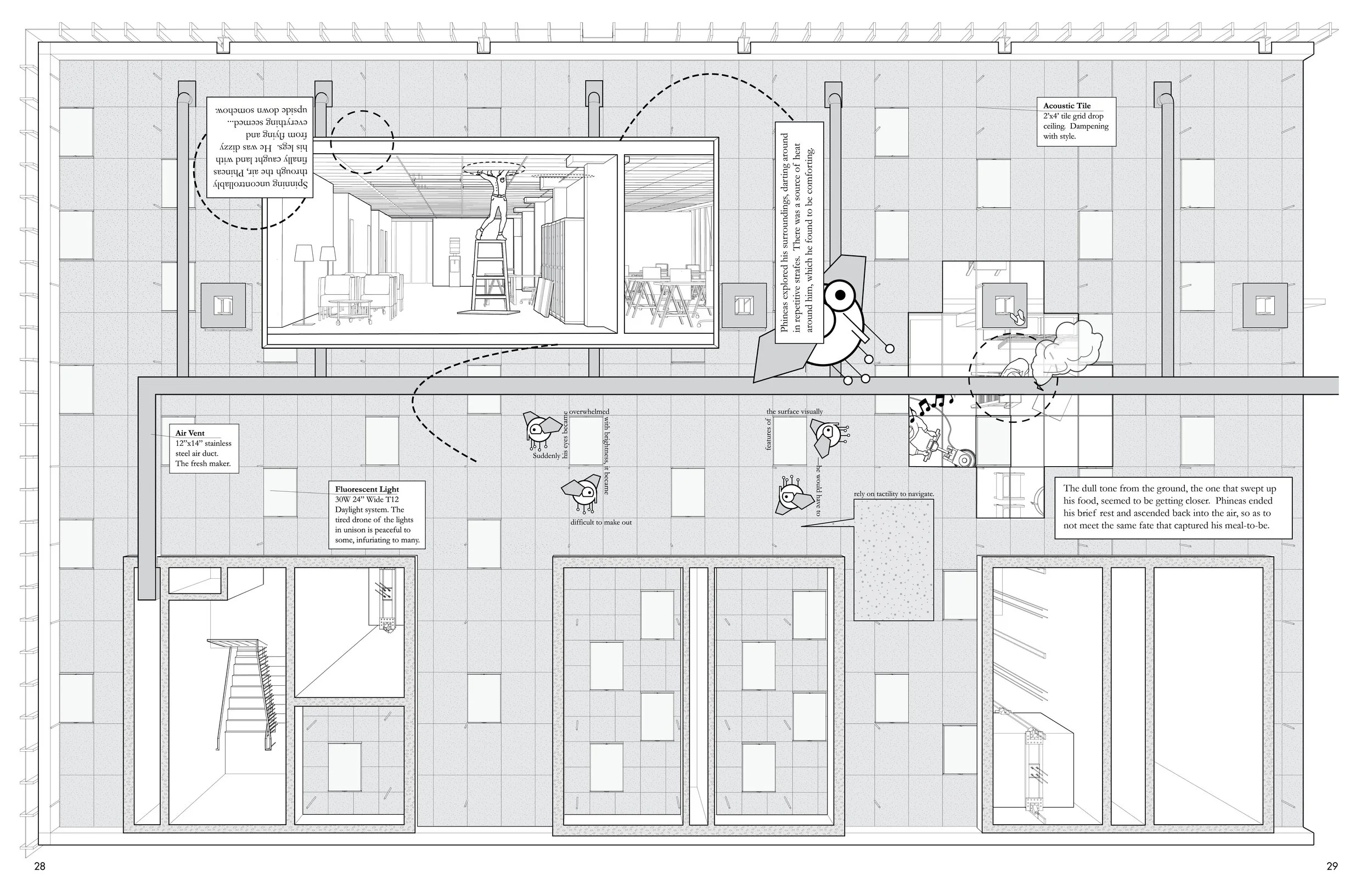
An excerpt from Beautifully Banal, our second place entry prepared for the 2015 Architecture Fairy Tales Competition Vol 2
Now a decade into the profession post graduate school, I reflect on the habits I’ve evolved under the banner of “commercial viability” and those of which I’ve relegated to the waste bin. It was perhaps naive to think my dumpy characters, and by extension, dumpy design sensibilities could ever carry me into the workforce, and in fact in even trying to do so so earned me the black marked moniker of “creative weirdo” at my first corporate role (read: my second defiant act against the institution of architecture). But still, the corners of my mind which first imagined the possibility of a weirder world to inhabit have never gone extinct even if made dormant by more pressing priorities. The more I learned of the real world of development crafted by my “professional hand” the more I desired to parody the same themes as rendered by my “true hand”.
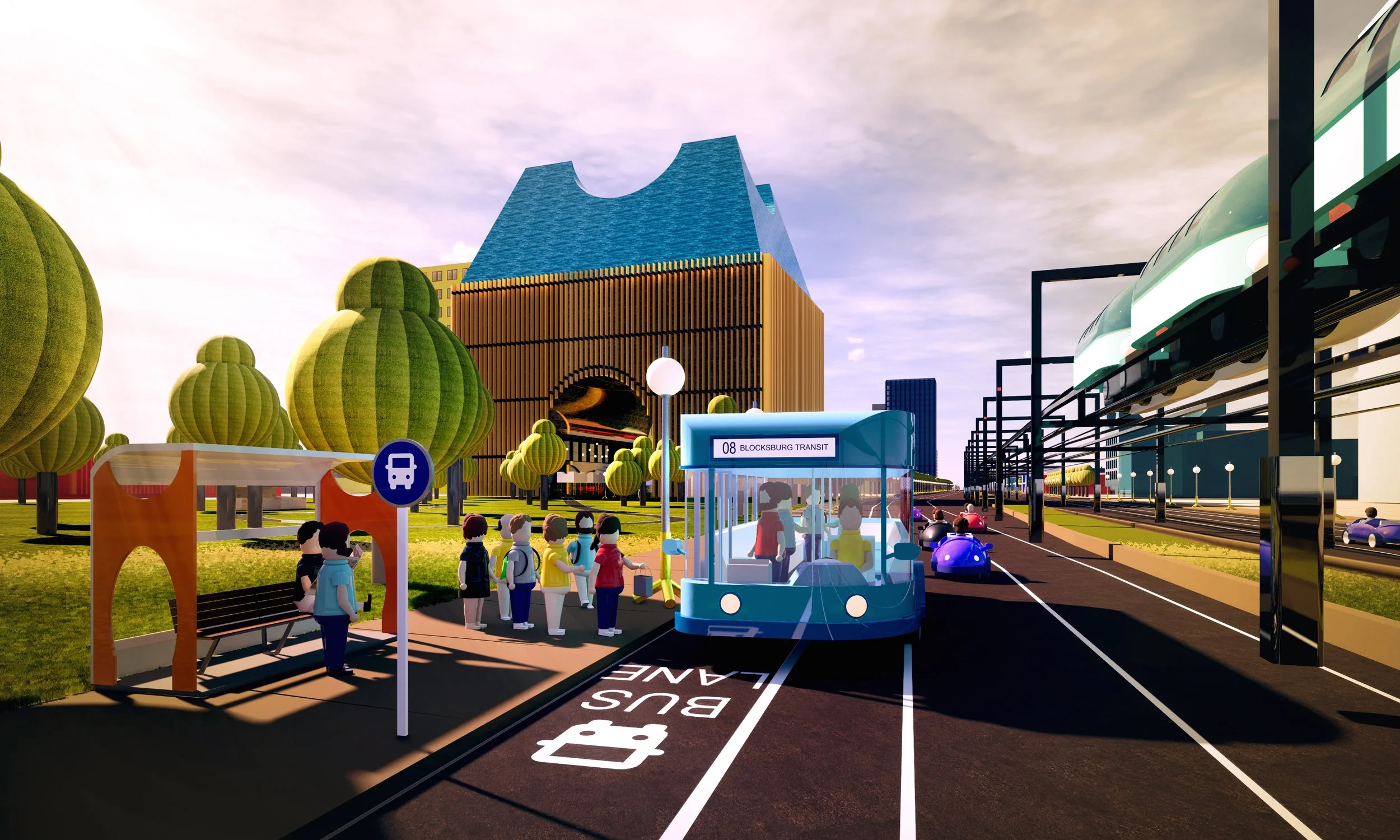
Block Parti is an architectural parody of a mixed-use Transit Oriented Development
So where does this all leave us? What remains is this collection of projects and stories, a website built in the image of the scale figures which occupy it to create a sort of Dumpy cinematic universe. The denizens who call this place home are the product of more than 15 years of creative contemplation and imagination run wild. This is my world, this is Dumpy World. I hope you’ll enjoy your visit.
…
Alexander Culler is the co-founder and director of Arch Hero and creator of Dumpy World. He is an illustrator, product design hopeful, and registered architect. Forever an advocate of good humored design and proponent of the dadliest puns imaginable.
Arch Hero is a Pittsburgh based ideas studio focused on elevating the banal for humor and entertainment. It is trapped somewhere between an extra-curricular academic portfolio and an untapped creative ad agency. If you or someone you know is looking to collaborate on a project or know of an opportunity which could benefit from Arch Hero’s visual brand identity, send us a note below:
CONTACT | info@arch-hero.com